
Thermal Drywalling
Discover the advantages of thermal drywalling for insulation and temperature regulation…


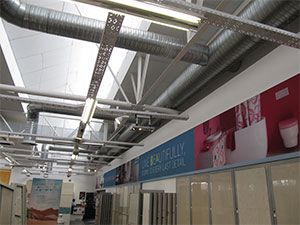
WMS Architects contacted us to assist with thermal drywalling solution and installation at Italtile in Boksburg as part of their solution for cold air moving onto the sale floor in winter from receiving/dispatch and hot air in the summer.
The major concern was not to put extra weight on the existing slab, as little as possible disturbance to clients, purlins, cross beams, aircon ducts ext. to work around. Thermal drywalling was the sensible solution.
The floor tracks for the thermal drywalling structure had to be fixed on top of the existing walls and to purlins and existing roof structures and boarded both sides with insulation in between. Special care had to be taken to board around existing structures and it had to be skimmed to smooth in with existing walls and to ensure a perfect seal.
Special care had to be taken on the shop floor whilst installing the thermal drywalling as to not disrupt trading where possible and to work with safety of the clients being a priority.
After all was completed plaster primer was applied and the specified paint used to match the existing paint.
We were also asked to repair sections of ceiling due to damage and initial poor installation.
As can be seen the final thermal drywalling was not only functional but also aesthetically pleasing and was the perfect solution for the thermal issues this business experienced.
The thermal drywalling was created from galvanized floor track which was fixed to the floor with nail in screws, galvanized floor track fitted to the ceilings and galvanized studs as per supplier recommendation. Corner sections done with galvanized angle and all secured with drywall screws. Thermal insulation was fitted between boards.
It needs to be noted that accuracy when constructing the thermal drywalling is of utmost importance. If the structure is poorly constructed the end product will be of poor visual quality. After the structure was completed 12.5mm Gypsum board cladding was used.
Joint was then fiber taped and two coats Rhinoglide applied to the thermal drywallng. Once dry, the joints was sanded to a smooth finish in preparation for painting.
Well done to the team!!!
Below a link with some more information: